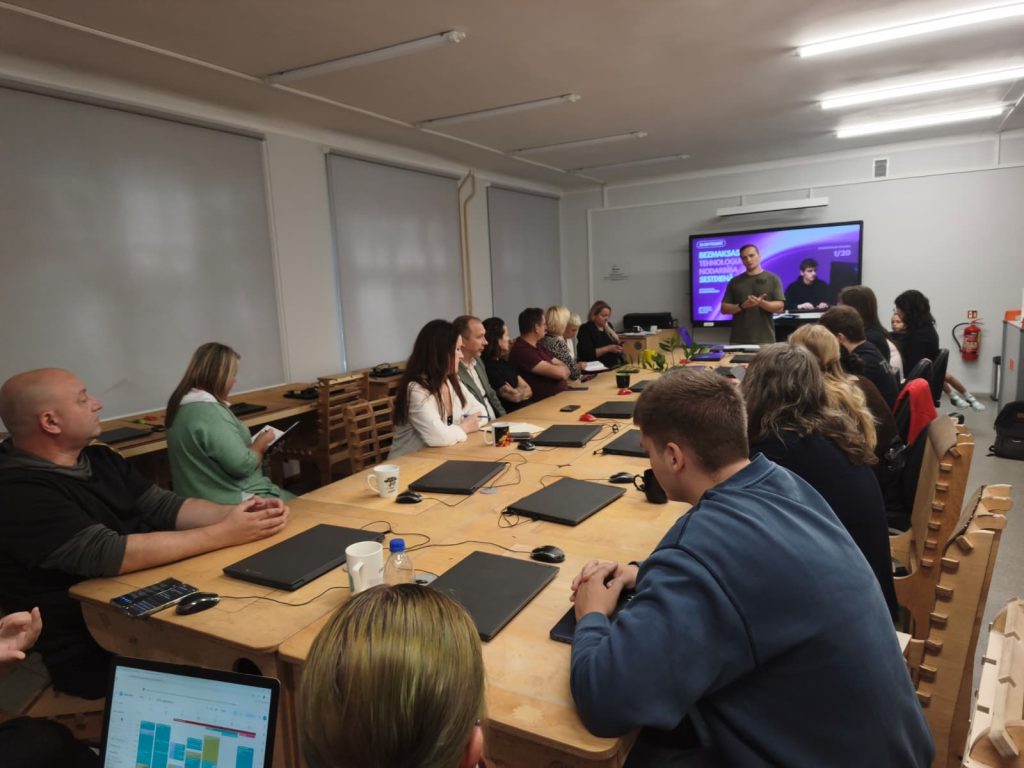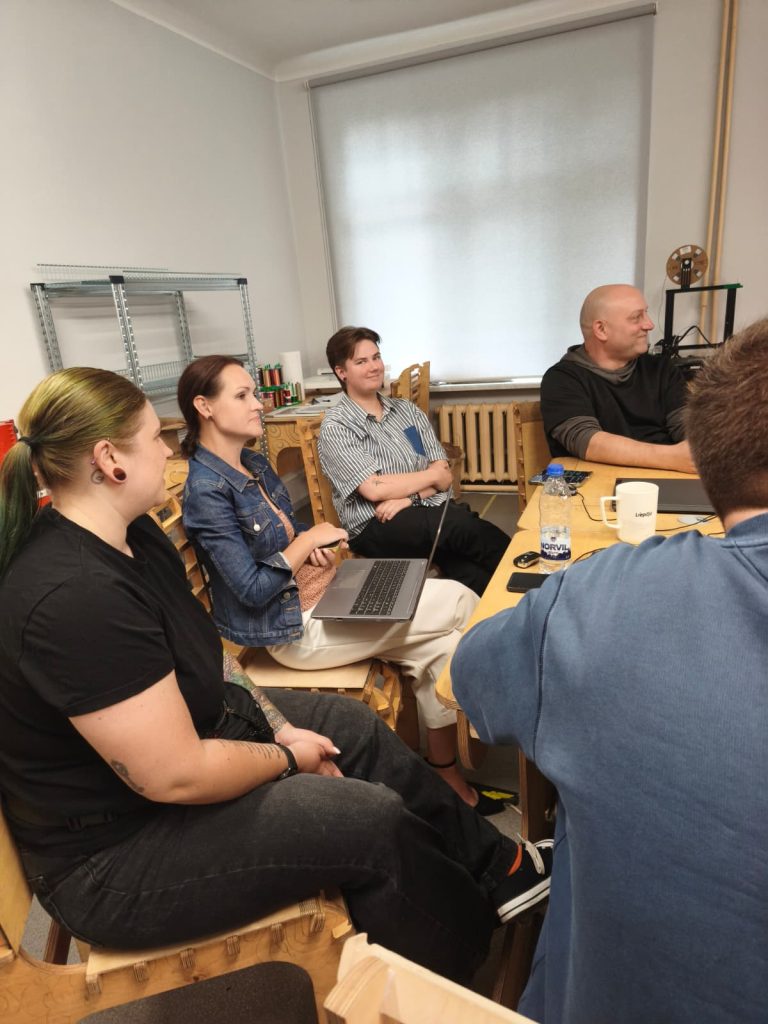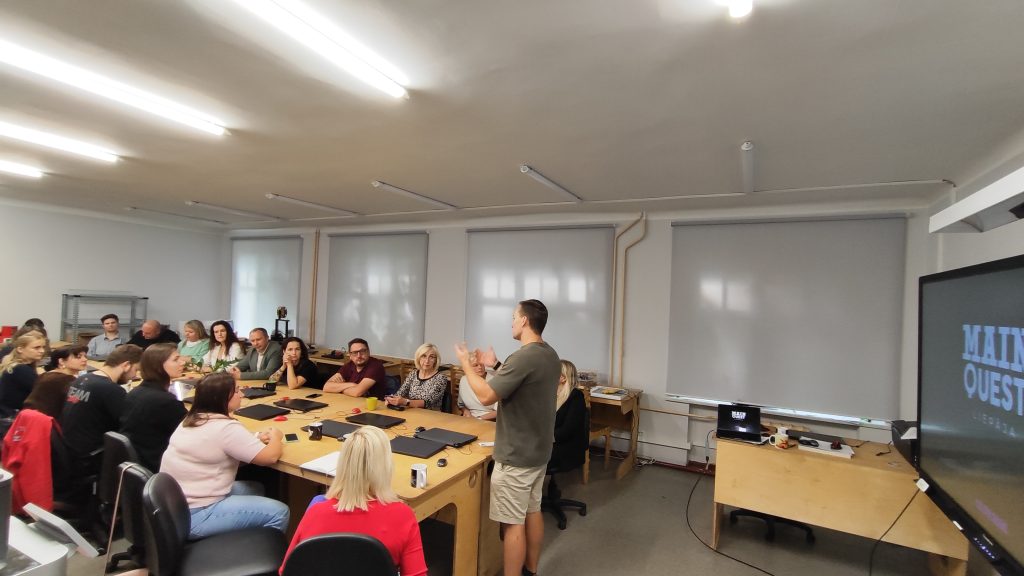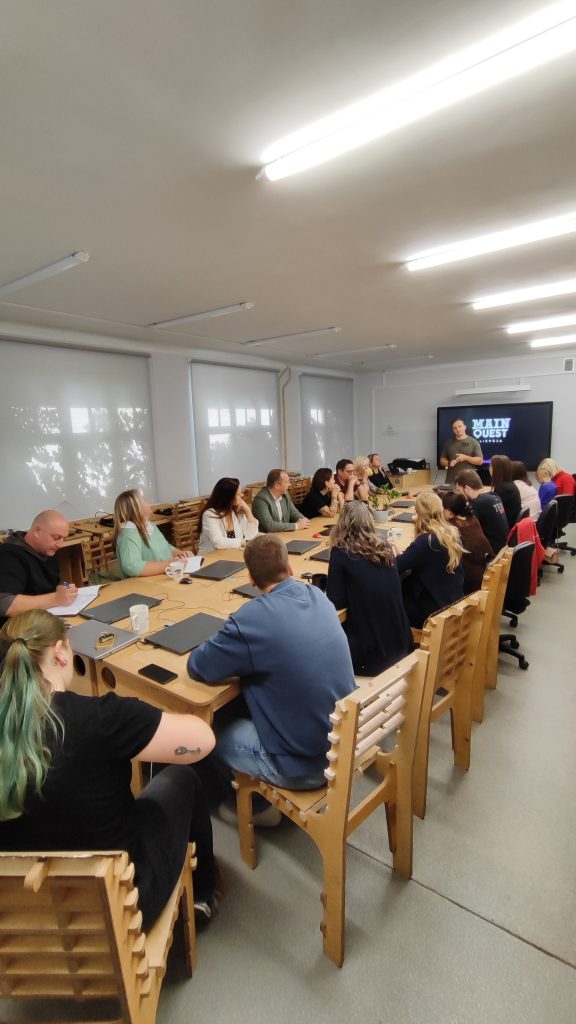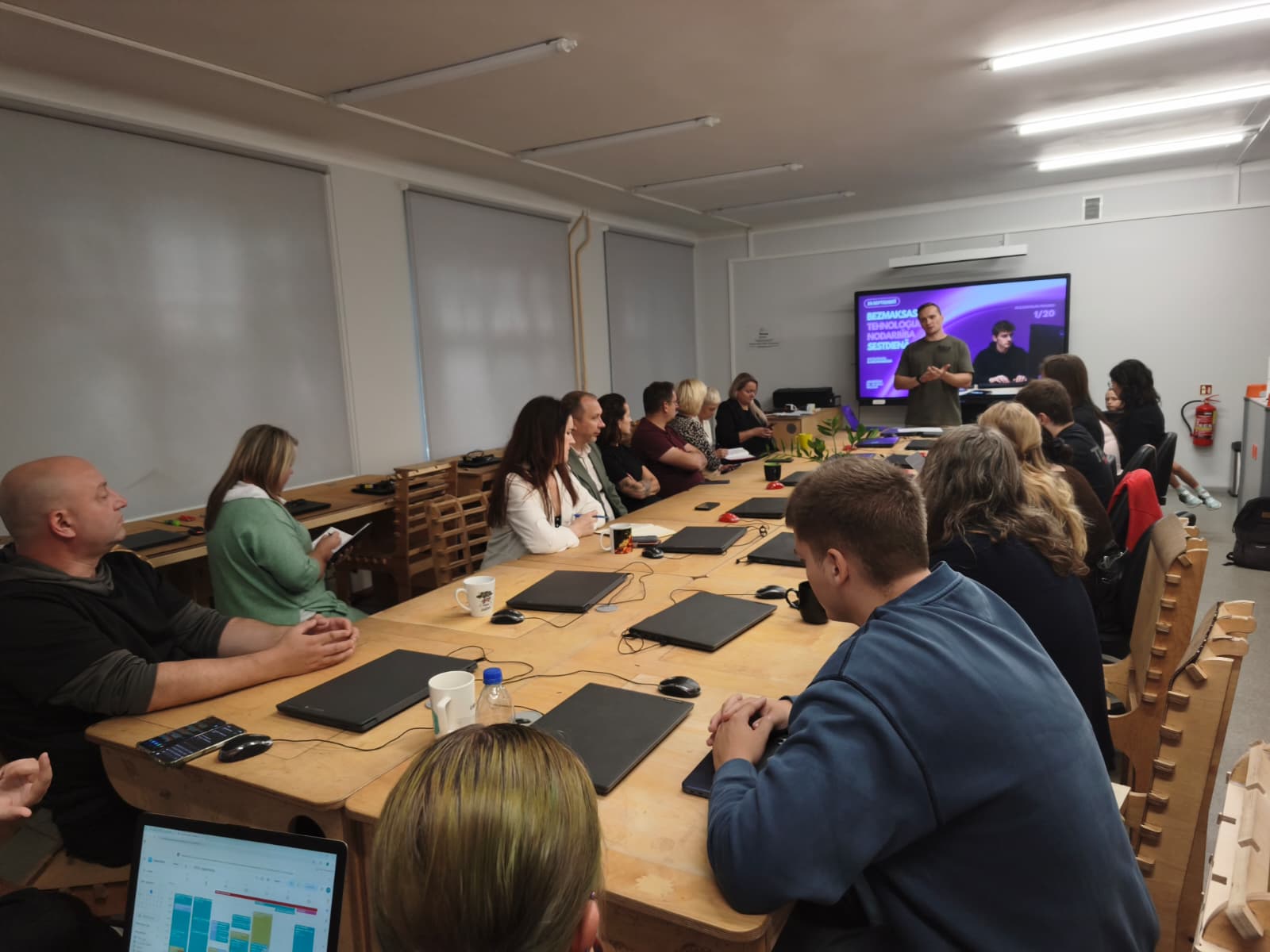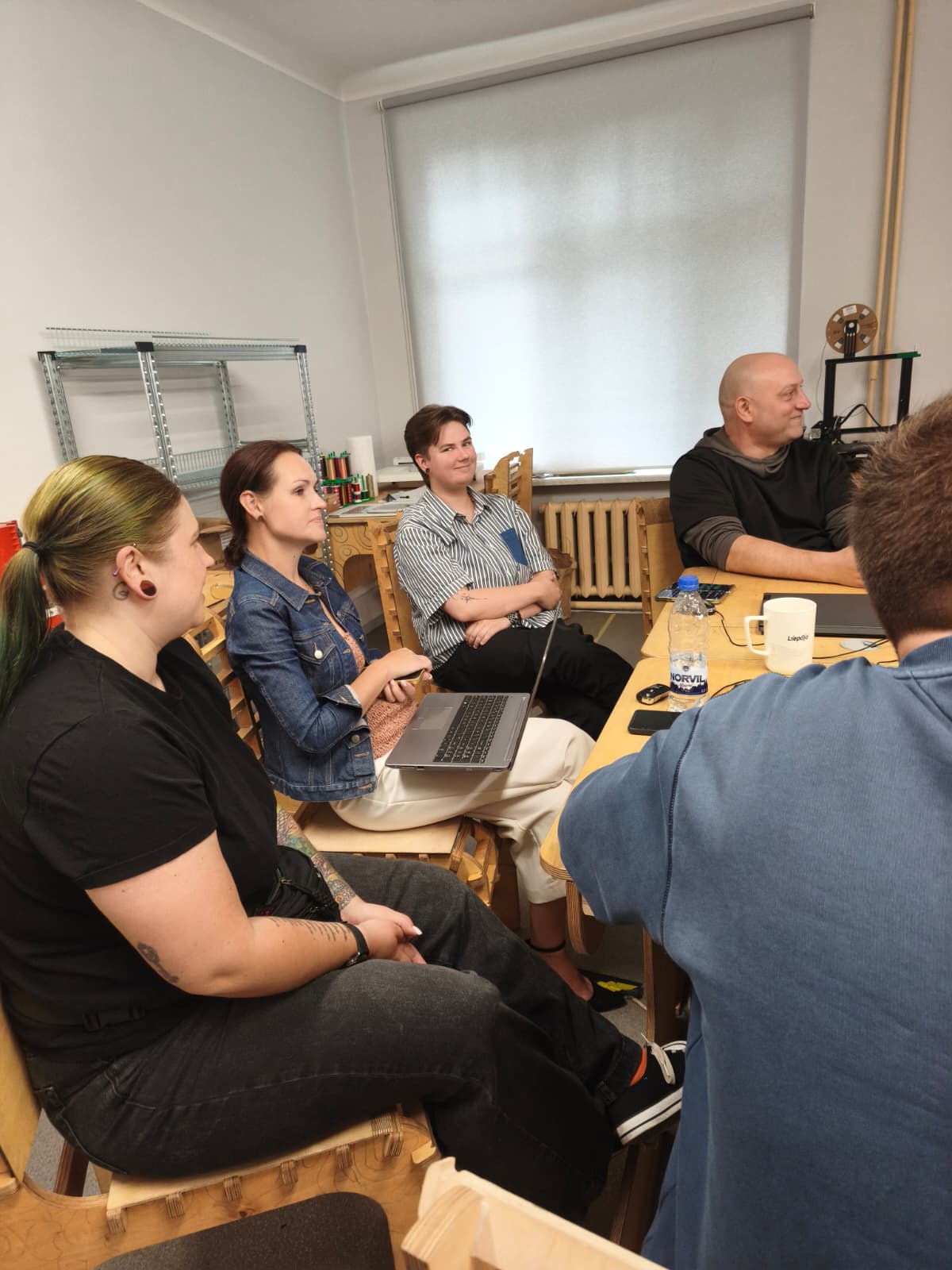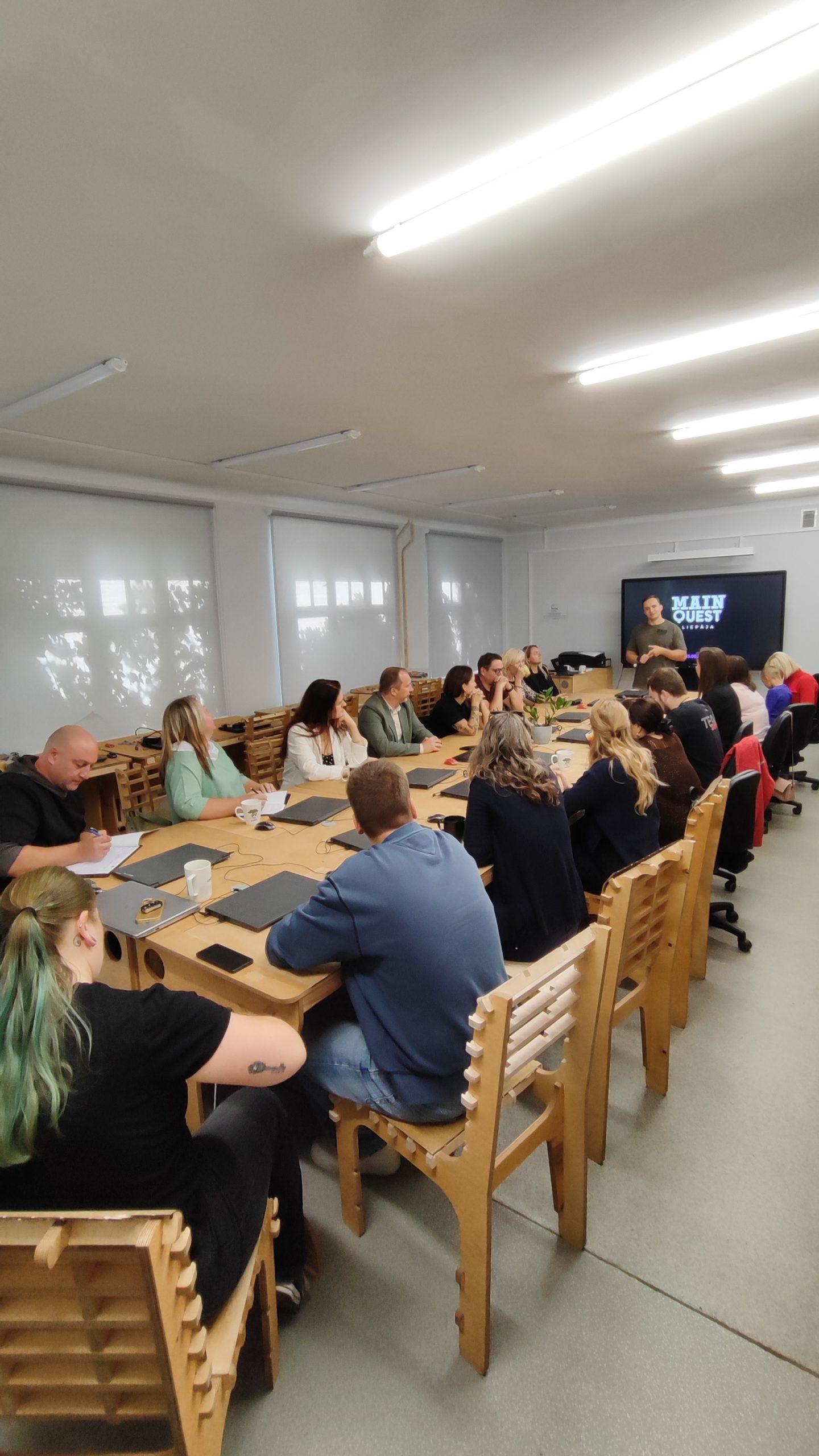



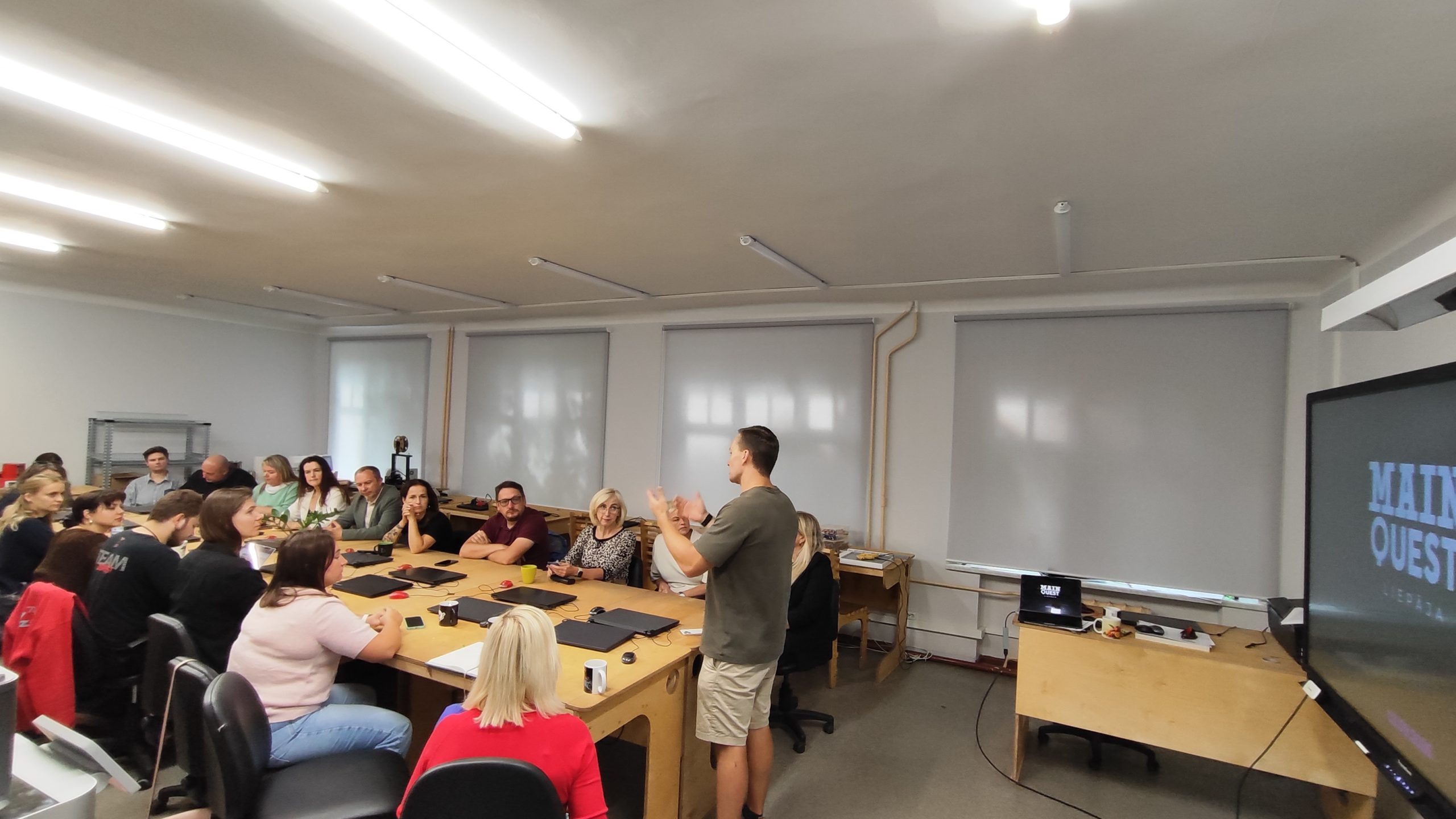
On 3 September 2026, a cross-sectoral working group gathered at the FabLab premises in Liepāja to discuss the next steps in developing MainQuest Liepāja, the city’s digital youth centre, and expanding opportunities for young people during the 2026/2027 academic year.
The meeting brought together representatives from education, youth work, information technology, sports, culture, social services and career guidance. The discussions focused on developing new activities, strengthening cooperation between local stakeholders and creating opportunities for young people to explore digital technologies, develop practical skills and connect with others.
From Playing Games to Creating Them
One of the key initiatives discussed was the development of a game development programme in cooperation with GameDev Latvia, bringing young people closer to the creative and technical processes behind video games. The initiative reflects an important part of the MainQuest approach: encouraging young people to move beyond consuming digital content towards creating it, while developing creativity, problem-solving abilities and technical skills.
Digital Saturdays – New Opportunities for Young Adults
Another initiative presented during the meeting was Digital Saturdays, a programme consisting of 20 thematic sessions for young adults aged 18–30. The programme is scheduled to run until February 2027, offering participants opportunities to explore artificial intelligence, prototyping, technical aspects of gaming and other digital topics. The flexible format is designed to allow participants to select activities according to their interests and learning needs. Alongside these activities, discussions addressed the development of a dedicated IT and gaming community for girls, in cooperation with Liepaja TechGirls. The initiative aims to encourage greater participation of girls and young women in technology-related activities and help challenge stereotypes about digital professions and gaming.
Towards the First Liepāja School E-sports League
A major focus of the meeting was the proposed establishment of the Liepāja School E-sports League, bringing together schools from across the city through organised gaming competitions. The concept includes inter-school tournaments, live-streamed matches and opportunities for the strongest teams to progress towards national-level competitions. Beyond competitive gaming, the league is envisioned as a platform for developing teamwork, strategic thinking, communication and digital skills. It could also provide an alternative pathway to engagement for young people whose interests and talents are not always recognised through traditional extracurricular or non-formal education activities. The discussions highlighted the potential of e-sports to build a supportive local gaming community, identify emerging talent and challenge stereotypes associated with gaming.
Building a Connected Digital Youth Community
The development of MainQuest Liepāja demonstrates how digital technologies can serve as a bridge between young people’s interests, education, creativity and meaningful social participation. By bringing together municipal institutions, NGOs, educational organisations and technology professionals, the centre is developing an environment where young people can discover new interests, strengthen their competences and access opportunities that extend beyond gaming.
These initiatives also contribute to the broader objectives of the cross-border project “Digital youth center in Klaipėda and Liepaja” (LL-00219), implemented under the Interreg VI-A Latvia–Lithuania Programme 2021–2027. The project aims to develop innovative digital youth work methods, strengthen youth workers’ competences and improve opportunities for young people, particularly those who may be less engaged in traditional youth work activities.
MainQuest Liepāja continues to evolve as a space where digital interests become opportunities for learning, creativity, inclusion and personal growth.
The project “Digital youth center in Klaipėda and Liepaja” (LL-00219) is co-funded by the European Union under the Interreg VI-A Latvia–Lithuania Programme 2021–2027.
This publication has been produced with the financial support of the European Union. Its contents are the sole responsibility of Liepaja City Municipality Central Administration and do not necessarily reflect the views of the European Union.