





From June to August 2026, the ConnectingGen project (“Connecting Generations in Diversity”, No. LL-00241) analysed volunteer engagement and cooperation approaches applied in the field of social services in Kurzeme. The findings show that the potential of volunteering in the region is not yet being fully utilised. Almost half of the surveyed social service providers had not involved volunteers during the past three years, while only 17% of organisations reported an increase in volunteer engagement. At the same time, organisations with experience in working with volunteers generally evaluate this experience positively, highlighting benefits both for service users and for the organisations themselves.
The research involved 29 organisations registered in the Register of Social Service Providers in Kurzeme and 10 organisations with practical experience in engaging volunteers. In addition, three in-depth interviews were conducted with representatives of good practice – the association “Ziemupīte”, the Social Service Agency of Saldus Municipality and the public benefit organisation “Hospiss LV”.
The research shows that volunteers most often assist with organising leisure activities, accompany clients on walks, participate in celebrations and charity events, and help with everyday practical tasks. Organisations report that this helps provide clients with more individual attention, improve their emotional well-being, foster social connections and strengthen links with the local community.
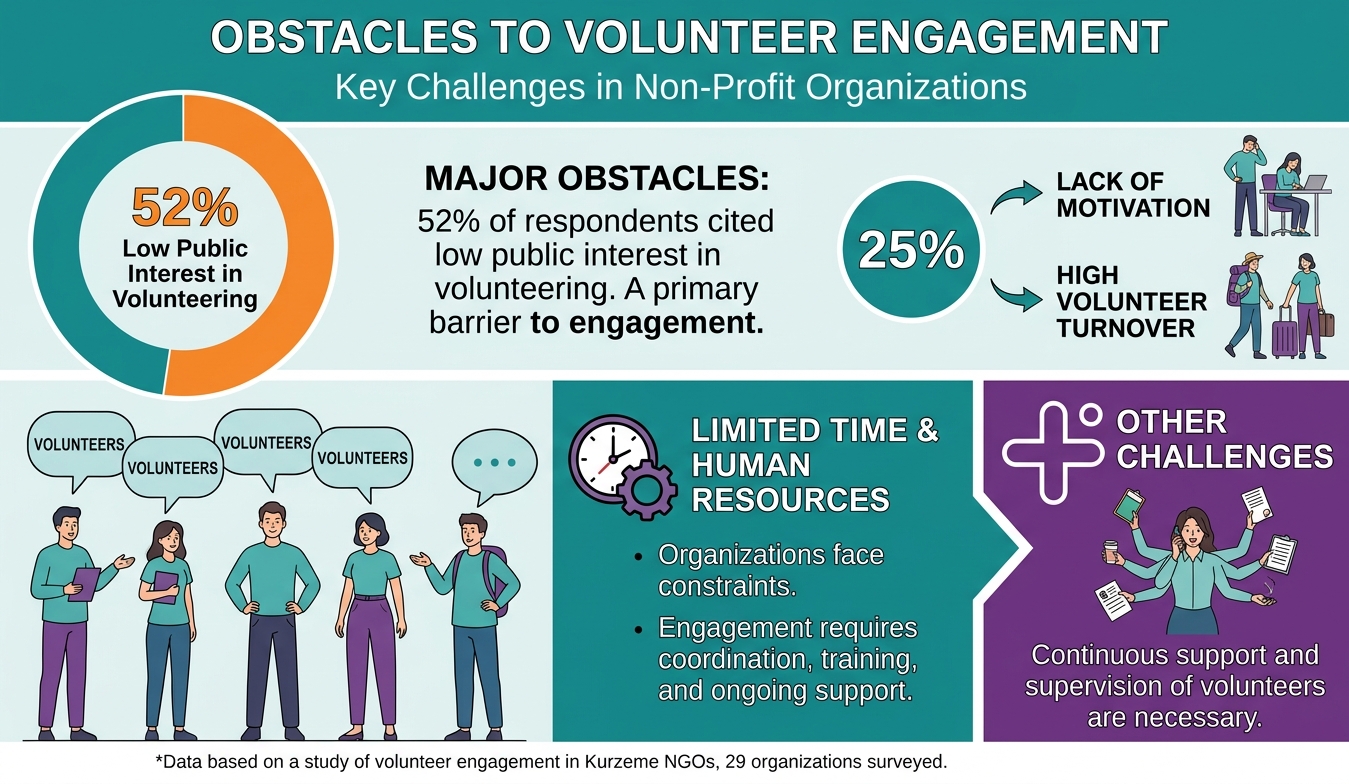
At the same time, 52% of respondents identified low public interest in volunteering as the main obstacle, while 25% pointed to a lack of motivation and high volunteer turnover. Another challenge is the limited time and human resources available to organisations, as volunteer engagement requires coordination, training and ongoing support.
In many organisations, a systematic approach to working with volunteers is also still lacking – only 28% of organisations assess volunteer candidates, 24% provide introductory training, and more than half do not have a designated person responsible for coordinating work with volunteers.
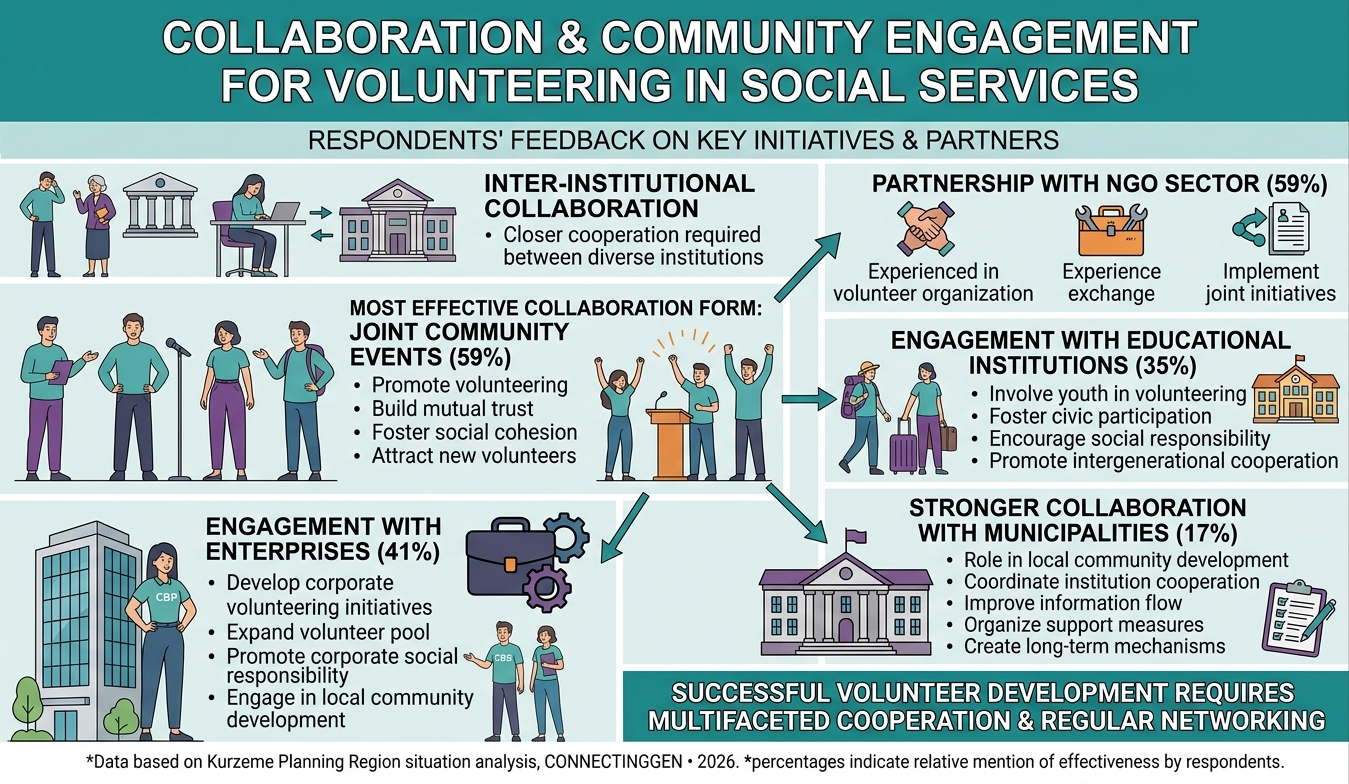
The organisations themselves identified experience sharing, broader public awareness-raising and funding for volunteer coordination as key solutions. They also highlighted the need for clear guidelines and closer cooperation between social service providers, municipalities, NGOs, educational institutions, businesses and local communities. The majority of surveyed organisations expressed their willingness to participate in a joint volunteer cooperation network in the Kurzeme region.
Read the full study here – Study of volunteer work in social services