


The partners of the Interreg Latvia-Lithuanian program project “Development of a concept of mobile complex services for socially vulnerable groups in Livani and Mažeikiai” (MultiMobile, LL-00088) – Līvani and Mažeikiai municipalities – have presented an important outcome: detailed methodological guidelines and practical instructions have been prepared for the provision of mobile social services by electric buses in rural areas.
The methodological material has been prepared in Lithuanian and Latvian languages, and will therefore be valuable not only to the project partners, but also to other Lithuanian and Latvian municipalities that are facing similar challenges regarding the accessibility of social services in the rural areas.
Methodological guidelines provide a systematic response to the pressing regional challenge of accessibility of social services in remote areas where population ageing, migration and the digital divide limit access to timely assistance. The developed methodology includes a situation analysis in Lithuania and Latvia, a comparison of social service provision models, the identification of priority population groups, and a description of service content. The document presents seven main categories of services, ranging from administrative assistance and digital skills development to library and labour market services, as well as clear standards, examples, and organisational principles for their delivery.
Practical instructions have also been prepared for pilot activities in the municipalities of Mažeikiai and Līvani. It describes the work procedures, routes and visit organisation in detail, as well as the registration forms, quality requirements, satisfaction surveys and activity templates for specialists. The instruction provides a specific work model involving informing residents before the visit, managing client flows on site, and documenting activities after the service has been provided.
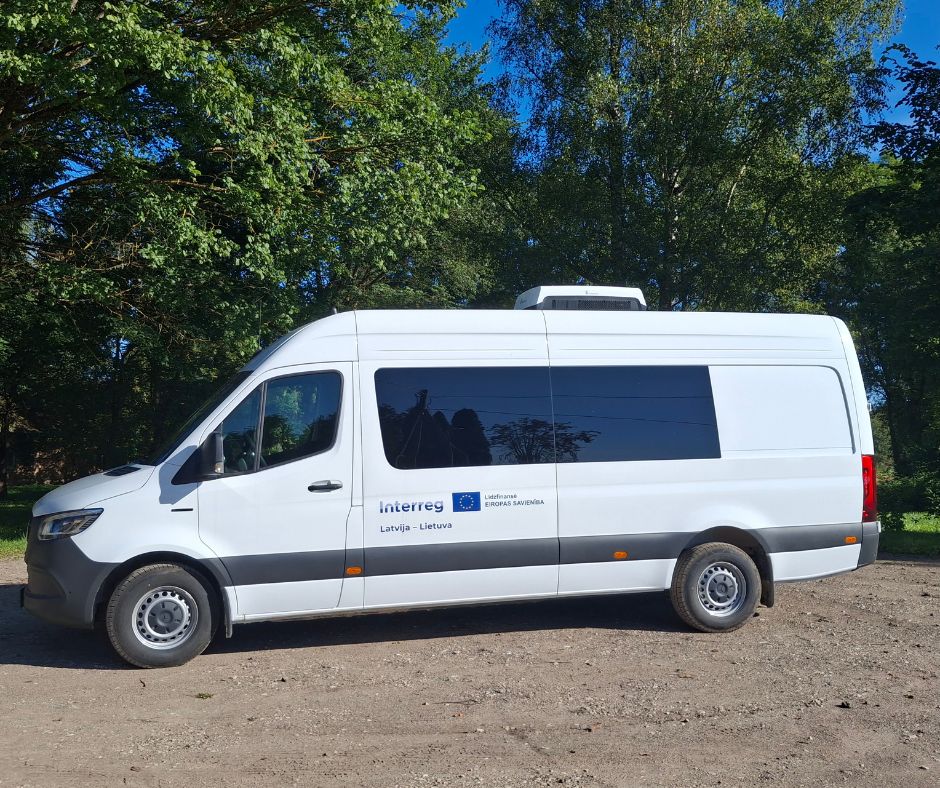
The project also involves acquiring two electric buses – one of which is already delivered to Līvani municipality and the other is expected to be delivered to Mažeikiai in December. These vehicles are equipped with two workstations containing computers, printers and internet access, and are adapted for people with disabilities. Electric transport will ensure that services are accessible and environmentally friendly, even in the most remote rural areas.
It is expected that this model will set an example for other regional municipalities seeking effective solutions to improve social service accessibility.